Support at Home changed more than how services get funded. It changed who's on the hook when something goes wrong.
Under the Aged Care Act 2024, a registered provider carries non-delegable accountability for every associated provider and third-party supplier delivering into a client's home, the physio, the nurse, the support worker who isn't on your payroll but is absolutely on your books when the regulator comes asking.
Subcontracting the work has never meant subcontracting the responsibility. What's changed is that this is no longer a compliance footnote, it's a structural test of whether a provider has the necessary operational visibility over its supplier network.
Why "we're covered" doesn't hold up anymore
For a lot of providers, that's an uncomfortable distinction to sit with. "We've got agreements with our suppliers, we're covered" was a reasonable answer under the old model. It isn't now. A signed agreement tells the regulator what was supposed to happen. It says nothing about what actually did, which services were delivered, by whom, against which claim, with what evidence to back it up. That gap between "contracted" and "provable" is exactly where non-delegable accountability starts to become a concern.
What real operational visibility looks like
In practice, operational visibility comes down to three things:
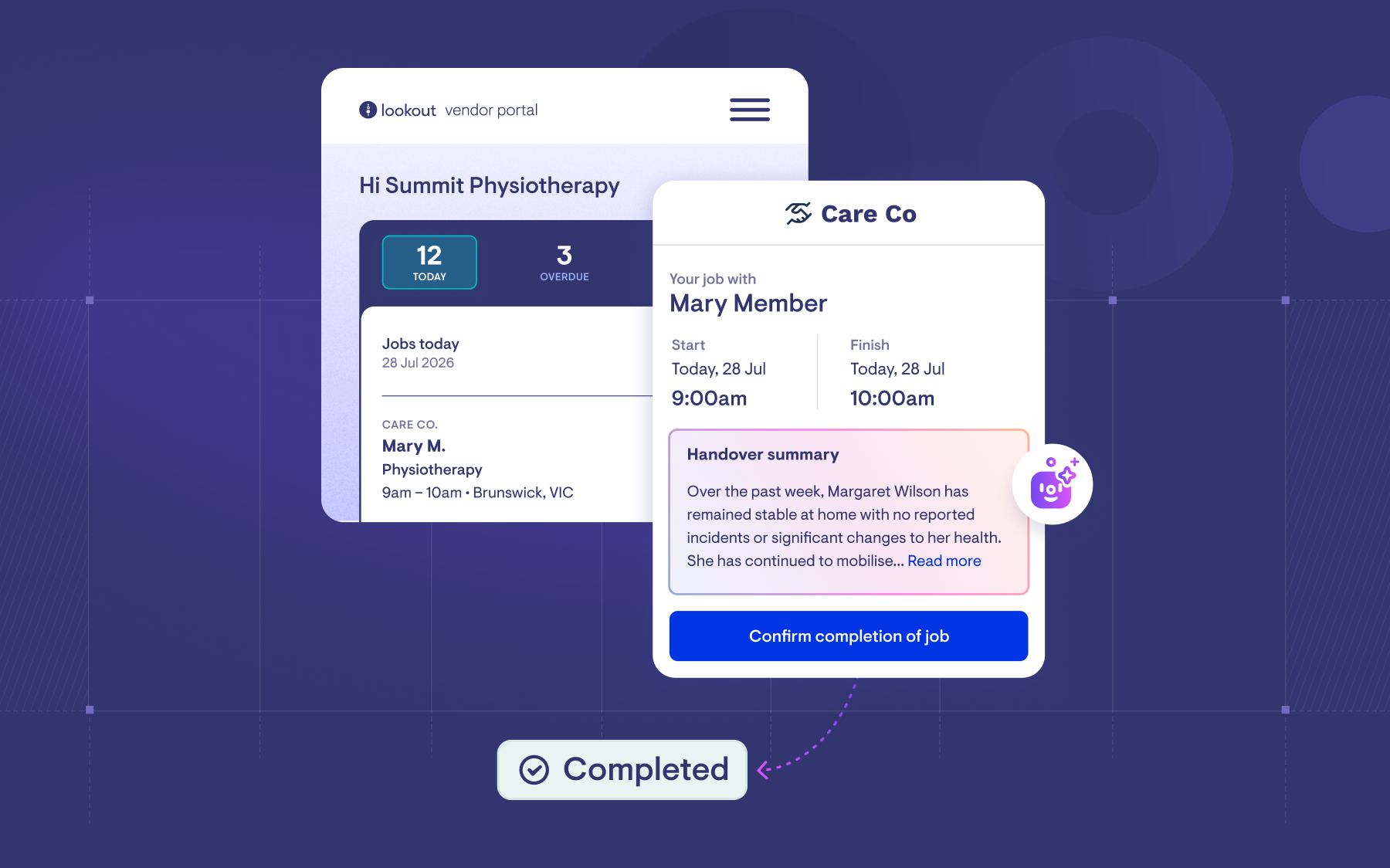
- Knowing which supplier delivered which service to which client, and when, matched against a live claim rather than reconstructed after the fact
- Having that information in near real time, not at quarter-end
- Holding the evidence with the provider, not scattered across supplier systems where it's out of reach the moment it's needed
Lessons from 79 transitions and 4 million claims
Since Support at Home began on 1 November 2025, we've supported 79 providers through the transition and reconciled more than 4 million claims with Services Australia in the process. The pattern across those transitions is consistent, and predictable. Providers who came in with a clear line of sight over their associated provider network, even an imperfect one, moved through the transition in weeks. Providers who were relying on supplier goodwill and end-of-month reconciliation are the ones still catching up.
Suppliers are opting in, not being pushed
Providers don't have to force accountability onto their supplier network. Give suppliers a simple checkout link to confirm a purchase order, and 60% use it, with adoption climbing every quarter. The matching invoice then gets processed roughly a week faster. Offer full self-service portal access, and six in ten switch it on. Done well, operational visibility gives suppliers a faster way to work, and the proof follows as a byproduct.
None of that is a knock on those providers. Most built their supplier relationships under a model that didn't ask for this kind of visibility. Structural shifts always separate operational readiness from paper readiness, aged care included. What's new is how quickly Support at Home has made the gap visible.
Three questions worth asking this quarter
If you want a quick read on where your own organisation sits, ask yourself:
- Can you produce, for any associated provider service delivered in the last 30 days, matching evidence of what happened and when?
- Is that evidence sitting with you, or do you need to chase it from the supplier?
- If ACQSC asked for it tomorrow, how long would it take?
If the honest answer to any of those is "longer than we'd like," that's worth solving now, rather than waiting for it to be tested for you.
Closing the gap
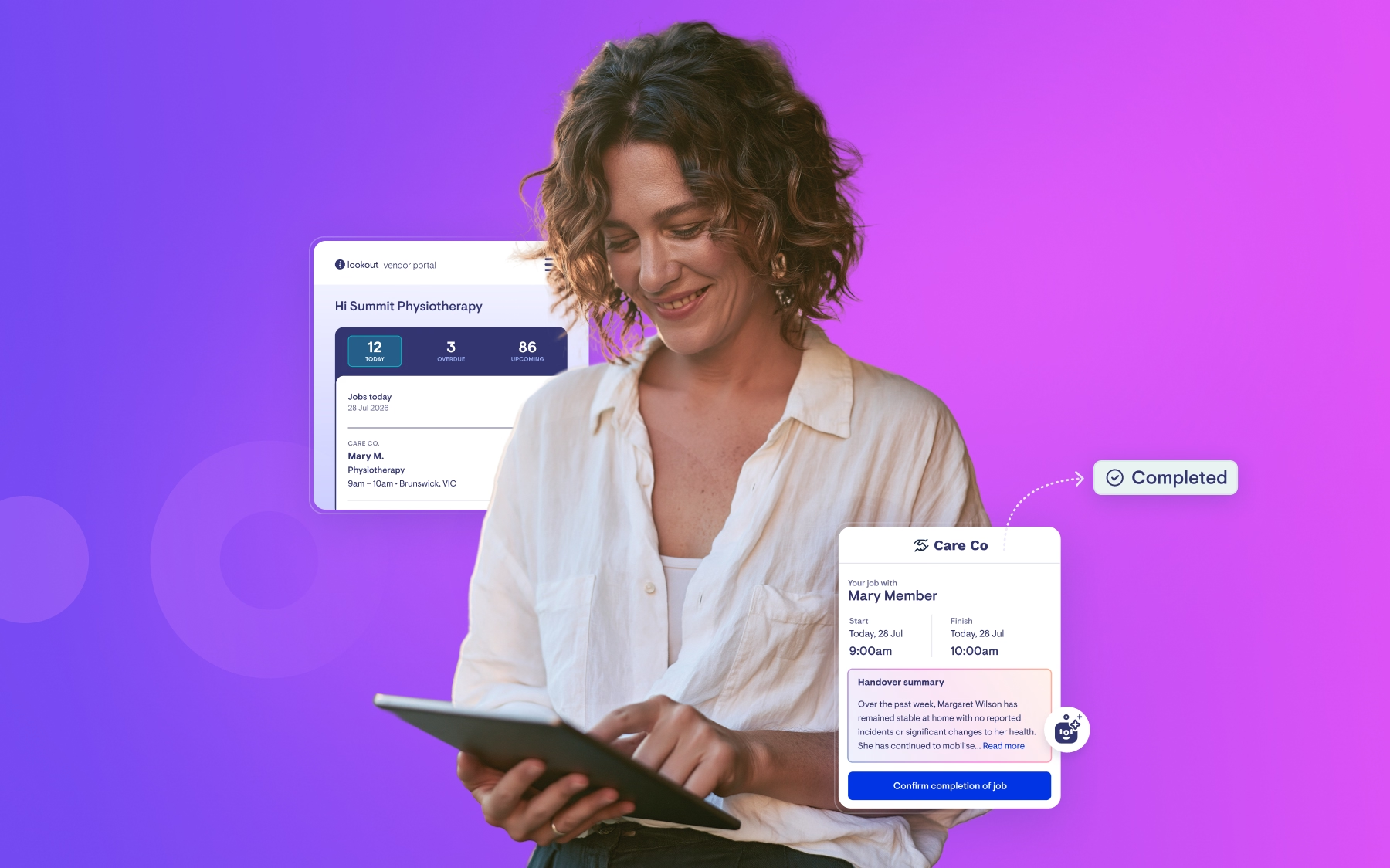
This is precisely the gap Connected Care was built to close: giving providers a single, real-time line of accountability across every associated provider and supplier delivering into a client's home, so "we subcontracted it" stops being a question you have to answer defensively.
For the full breakdown on what operational readiness under this accountability model looks like, download The State of Support at Home Transition